


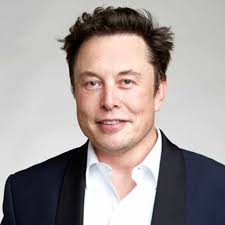
Elon Musk is one of the most influential innovators of the 21st century. Known for his ambitious ideas, groundbreaking companies, and relentless pursuit of a better future, Musk has become a global symbol of technological disruption. From revolutionizing online payments to accelerating the world’s transition to sustainable energy and pushing the boundaries of space travel, his journey reflects a blend of genius, resilience, and visionary thinking. This detailed biography on Elon Musk explores his early life, education, entrepreneurial milestones, innovations, personal challenges, and global impact.
Early Life and Childhood of Elon Musk
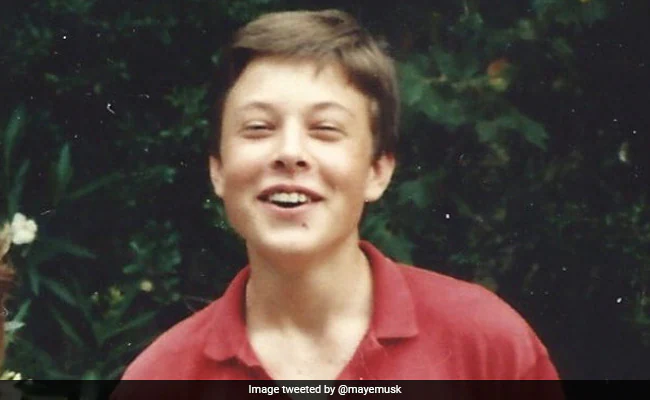
Elon Reeve Musk was born on June 28, 1971, in Pretoria, South Africa. His mother, Maye Musk, was a dietitian and model, while his father, Errol Musk, was an engineer. Growing up in a middle-class home, Musk showed early signs of curiosity and independence. He spent much of his childhood reading books, learning about science, and experimenting with computers. By the age of 10, he had developed a passion for programming. At 12, he created his first video game, Blastar, and sold it to a magazine for $500.
This period of self-driven learning shaped Musk’s problem-solving mindset. While school life was difficult due to bullying, he used technology and imagination as an escape. His early academic performance reflected his unique learning habits; he was more interested in exploring ideas than conforming to traditional structures.
Education and the Move to North America
Elon Musk left South Africa at 17 to avoid mandatory military service and to seek better opportunities abroad. He moved to Canada and enrolled at Queen’s University before transferring to the University of Pennsylvania. At Penn, Musk pursued two degrees: Physics and Economics from the Wharton School. His academic journey gave him a strong foundation in both scientific thinking and business strategy.
Musk later earned admission to Stanford University for a PhD in Applied Physics, but he dropped out in just two days. The internet boom of the 1990s was unfolding and Musk believed it offered bigger opportunities than academic research. His bold decision marked the beginning of his entrepreneurial career.
The First Success: Zip2 and the Dawn of Musk’s Entrepreneurial Journey
In 1995, Elon Musk co-founded Zip2 with his brother Kimbal Musk. The company provided business directories and maps for newspapers. At a time when the internet was still in its early stages, Zip2 helped traditional media transition online. After several years of growth, Compaq acquired Zip2 for $307 million in 1999. Musk earned $22 million from the sale, giving him the capital to launch his next venture.
Zip2 was an example of Musk’s ability to identify emerging problems and create digital solutions long before they became mainstream trends.
Building X.com and PayPal’s Global Disruption
In 1999, Musk launched X.com, an online financial services and email payment platform. His vision was to revolutionize banking through digital payments. A year later, X.com merged with Confinity, and the combined platform became PayPal. Under Musk’s leadership as CEO, the company focused on secure and fast online payments.
In 2002, eBay acquired PayPal for $1.5 billion, and Musk received $165 million. PayPal’s success established him as a key figure in Silicon Valley, proving his understanding of technology, consumer behavior, and financial innovation.
The Birth of SpaceX and the Dream of Making Life Multiplanetary
SpaceX, founded in 2002, was Musk’s boldest venture. His mission was to reduce the cost of space travel and eventually enable humans to live on Mars. Critics called his vision impossible, especially since private space companies were rare at the time and the industry was dominated by government agencies.
After multiple rocket failures, severe financial loss, and the risk of bankruptcy, SpaceX achieved success in 2008 when the Falcon 1 became the first privately developed liquid-fuel rocket to reach orbit. NASA awarded SpaceX a major contract to resupply the International Space Station.
SpaceX went on to create innovations including reusable rockets, the Falcon Heavy, Starlink satellite internet constellation, and the Starship rocket. Today, SpaceX is one of the world’s most advanced aerospace companies, and Musk’s vision of interplanetary life is closer than ever.
Tesla: Revolutionizing the Automotive World
Musk joined Tesla Motors in 2004 as a major investor and later became CEO. The company’s mission was bold: accelerate the world’s transition to sustainable energy through electric vehicles. Musk’s leadership transformed Tesla from a struggling startup to a global automotive leader.
Tesla’s Milestones
Tesla launched several successful vehicles including the Roadster, Model S, Model X, Model 3, and Model Y. The introduction of Autopilot, battery innovation, and massive Gigafactories helped Tesla dominate the EV industry. In 2020, Tesla became the world’s most valuable car company by market capitalization, surpassing traditional giants like Toyota.
Solar Energy, AI, and Other Ventures
Beyond Tesla and SpaceX, Elon Musk has founded or supported several futuristic companies.
SolarCity
Co-founded with his cousins, SolarCity became the largest solar energy provider in the United States before merging with Tesla Energy. It supports Musk’s goal of renewable energy solutions.
Neuralink
Neuralink aims to develop brain-computer interfaces to treat neurological diseases and eventually enhance human cognition. Although controversial, the company symbolizes Musk’s interest in merging biology with technology.
The Boring Company
The Boring Company works on underground transportation tunnels to reduce traffic congestion. The Las Vegas Loop is one of its first commercial projects.
X (formerly Twitter)
In 2022, Musk acquired Twitter for $44 billion and rebranded it as X. His vision is to transform X into an all-in-one digital platform integrating payments, communication, and AI-driven tools.
Leadership Style and Public Image
Elon Musk’s leadership style is intense, unconventional, and visionary. He is known for setting ambitious deadlines, pushing innovation, and inspiring teams to attempt the impossible. Critics argue that his expectations are unrealistic, but supporters believe his approach leads to breakthrough achievements.
Musk is also highly active on social media where his posts often influence public opinion, financial markets, and global debates. His bold personality, controversial comments, and ambitious promises contribute to his complex image.
Comparisons and Influence
Elon Musk is often compared to historical innovators like Thomas Edison, Henry Ford, and Steve Jobs. Like them, Musk blends technology with long-term vision and refuses to accept limitations. His ability to enter multiple high-risk industries and achieve success distinguishes him from many business leaders.
Personal Life, Challenges, and Resilience
Despite his global success, Musk has faced personal and professional challenges. He has spoken openly about burnout, long working hours, stress, and criticism. Musk has been married multiple times and is a father of several children. His experiences with failure and setbacks show that his success was built through persistence rather than luck.
Global Impact of Elon Musk’s Work
Elon Musk’s contributions have influenced multiple sectors including automotive, energy, aerospace, AI, and digital technology. Tesla accelerated the shift toward electric mobility worldwide. SpaceX reduced space travel costs and expanded global internet access. Neuralink and other ventures continue pushing technological boundaries.
His biography reflects the story of a visionary who uses innovation to solve global problems, shape industries, and redefine the future.
FAQs on Elon Musk (Biography)
1. What is Elon Musk best known for
He is best known as the CEO of Tesla and SpaceX and as one of the most influential innovators of modern technology.
2.Where was Elon Musk born
Elon Musk was born in Pretoria, South Africa.
3.How did Elon Musk become successful
He built multiple companies including Zip2, PayPal, Tesla, and SpaceX and became known for solving complex global problems through innovation.
4.What is the mission of SpaceX
SpaceX aims to make space travel affordable and enable human life on Mars.
5.What other companies has Elon Musk founded
He founded or co-founded Neuralink, The Boring Company, OpenAI, SolarCity, and recently acquired Twitter (now X).
Conclusion
Elon Musk’s biography is a powerful example of how determination, creativity, and resilience can reshape the world. From his early days in South Africa to becoming one of the most influential figures in global technology, Musk’s journey is filled with innovations that challenge traditional limits. His work continues to redefine transportation, energy, space travel, and artificial intelligence. As the world evolves, Musk remains at the center of its technological transformation, inspiring millions with his vision of a better and more advanced future.


