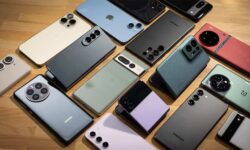



Huawei’s resurgence is no longer a quiet comeback—it is a headline-making shift in the world’s largest smartphone market.
Huawei has returned to the top of China’s smartphone market for two consecutive weeks, overtaking Apple, following the launch of its Mate 80 series. This milestone signals not only renewed consumer confidence in Huawei but also a broader transformation in China’s premium smartphone landscape.
For years, Huawei battled supply chain restrictions, chip shortages, and intense competition from both Apple and domestic rivals. The Mate 80 series appears to have changed the narrative—at least for now.
In this in-depth analysis, we’ll explore how Huawei achieved this comeback, what makes the Mate 80 series so compelling, how it compares with Apple’s iPhone lineup, and what this means for the future of China’s smartphone industry.
Understanding Huawei’s Return to the Top
Why China’s Smartphone Market Matters
China is the world’s largest smartphone market by volume and one of the most competitive. Success here is about more than sales numbers—it reflects:
• Brand trust and loyalty
• Technological self-reliance
• Pricing power in the premium segment
• Long-term ecosystem strength
When Huawei overtakes Apple in China, even briefly, it sends a powerful message to global markets.
Two Consecutive Weeks at No.1
Achieving the top spot for two consecutive weeks is significant because:
• Weekly rankings reflect real-time consumer demand
• Sustained leadership indicates momentum, not a one-day spike
• It suggests strong early adoption of the Mate 80 series
Unlike seasonal promotions or short-term discounts, the Mate 80 launch appears to have driven organic demand.
The Mate 80 Series: The Engine Behind Huawei’s Momentum
What Is the Mate Series Known For?
Huawei’s Mate line has long been associated with:
• Cutting-edge hardware
• Professional-grade photography
• Business and productivity-focused features
• Early adoption of Huawei’s latest chip and software innovations
The Mate 80 series continues this tradition, positioning itself as a true flagship alternative to Apple’s iPhone and Samsung’s Galaxy Ultra models.
Key Highlights of the Mate 80 Series
While exact configurations vary by model, the Mate 80 lineup is widely praised for:
1. Advanced Kirin Chipset
Huawei’s in-house Kirin processor represents:
• Improved performance efficiency
• Greater control over hardware-software optimization
• Symbolic progress toward semiconductor independence
For Chinese consumers, this carries both practical and emotional appeal.
2. Premium Design and Display
The Mate 80 series emphasizes:
• High-refresh-rate OLED displays
• Refined industrial design
• Premium materials comparable to Apple’s Pro models
This helps Huawei compete directly in the high-end price bracket.
3. Industry-Leading Camera Capabilities
Huawei continues to dominate mobile photography with:
• Advanced computational imaging
• Improved low-light performance
• AI-assisted video and portrait modes
For many users, camera quality remains the decisive factor.
Huawei vs Apple: A Shifting Competitive Landscape
Why Apple Lost the Top Spot—For Now
Apple remains immensely popular in China, but several factors have impacted its recent performance:
• Incremental hardware upgrades
• Premium pricing in a price-sensitive economy
• Stronger competition from domestic brands
• Growing preference for locally developed technology
This doesn’t mean Apple is in decline—but it does suggest its dominance is no longer guaranteed.
Feature-by-Feature Comparison: Huawei Mate 80 Series vs Apple iPhone
When Huawei has returned to the top of China’s smartphone market for two consecutive weeks, overtaking Apple, following the launch of its Mate 80 series, much of the attention has centered on how the Mate 80 compares directly with Apple’s latest iPhone. A closer, feature-by-feature look reveals why many Chinese consumers are reconsidering their preferences.
Performance and Chipset
At the heart of the Huawei Mate 80 series is Huawei’s in-house Kirin chipset, which symbolizes the company’s technological resilience and vertical integration strategy. While Apple’s A-series processors still lead globally in raw benchmark performance, Huawei’s Kirin chip focuses on real-world efficiency, AI acceleration, and deep optimization with HarmonyOS. For everyday tasks such as multitasking, gaming, and AI-driven photography, the Mate 80 delivers a smooth and responsive experience that satisfies most power users. In China, the appeal of a domestically developed chipset also adds an emotional and strategic layer to the purchasing decision.
Operating System and Software Experience
The Mate 80 series runs on HarmonyOS, which has matured into a cohesive and intuitive operating system designed for seamless device-to-device connectivity. Users benefit from smooth integration across Huawei smartphones, tablets, wearables, smart home devices, and even vehicles. Apple’s iOS remains a benchmark for stability and long-term software support, especially within its global ecosystem. However, within China, HarmonyOS now feels more localized and practical, offering services and integrations tailored specifically to Chinese users’ daily needs.
Display Technology
Huawei equips the Mate 80 series with high-resolution OLED displays featuring high refresh rates and advanced brightness control. These screens excel in color accuracy, contrast, and eye comfort, making them ideal for media consumption and extended use. Apple’s iPhone displays are known for their precise color calibration and consistent quality, but Huawei’s focus on immersive viewing and smooth scrolling gives the Mate 80 a competitive edge for users who prioritize display performance.
Camera and Imaging Capabilities
Camera performance is one of Huawei’s strongest differentiators. The Mate 80 series builds on Huawei’s legacy of mobile photography excellence with advanced sensors, AI-powered image processing, and superior low-light performance. Huawei emphasizes hardware innovation combined with computational photography, resulting in sharp night shots and professional-grade zoom capabilities. Apple’s iPhone cameras, while extremely reliable and consistent, lean more heavily on software optimization. For users who prioritize photography versatility and creative control, the Mate 80 often feels more innovative.
Design and Build Quality
Both Huawei and Apple position their flagship devices as premium products, and this is evident in their design choices. The Mate 80 series features refined aesthetics, curved edges, and premium materials that convey a luxury feel. Apple’s iPhone maintains its minimalist design language with flat edges and a familiar premium finish. While Apple emphasizes design consistency, Huawei appears more willing to experiment, appealing to consumers looking for something visually distinct.
Battery Life and Charging
Battery performance is another area where Huawei differentiates itself. The Mate 80 series typically offers larger battery capacities paired with fast wired and wireless charging technologies. This combination caters to users who rely heavily on their smartphones throughout the day. Apple’s iPhones focus more on battery optimization than raw capacity, delivering dependable all-day usage but generally slower charging speeds. For power users, Huawei’s approach offers greater flexibility and convenience.
Ecosystem and Connectivity
Apple’s ecosystem remains one of its strongest assets, particularly for users who own multiple Apple devices. However, within China, Huawei’s ecosystem has expanded rapidly. The Mate 80 integrates seamlessly with Huawei laptops, tablets, smartwatches, and IoT devices, all powered by HarmonyOS. This growing ecosystem plays a key role in why Huawei has returned to the top of China’s smartphone market for two consecutive weeks, as consumers increasingly value seamless cross-device experiences from a single brand.
Market Appeal and Consumer Sentiment
Beyond technical specifications, market perception plays a crucial role. Huawei’s Mate 80 series benefits from strong national brand loyalty and a renewed sense of confidence in domestic innovation. Apple still commands prestige and global recognition, but Huawei’s comeback story resonates deeply with Chinese consumers, giving the Mate 80 series a cultural and emotional advantage that extends beyond hardware alone.
Why Chinese Consumers Are Choosing Huawei Again
1. National Brand Loyalty
Huawei’s comeback resonates strongly with consumers who value:
• Technological independence
• Domestic innovation
• Support for Chinese brands
This sentiment has become increasingly influential in purchasing decisions.
2. HarmonyOS Maturity
Huawei’s HarmonyOS has evolved into:
• A stable, feature-rich operating system
• Seamless integration across phones, tablets, wearables, and cars
• A viable alternative to Android and iOS within China
The Mate 80 series showcases this ecosystem at its best.
3. Perceived Innovation Leadership
Many users feel Huawei is taking more risks and innovating faster than competitors—especially in hardware design and imaging.
Industry Insights: What This Means for the Smartphone Market
Short-Term Impact
• Increased competition in the premium segment
• Pricing pressure on Apple and Android rivals
• Higher visibility for Huawei’s flagship lineup
Long-Term Implications
• Stronger domestic supply chains
• Faster evolution of HarmonyOS
• Potential expansion of Huawei’s influence beyond China
If Huawei sustains this momentum, it could redefine what leadership looks like in the post-Android, post-iOS era—at least domestically.
Expert Perspective: Is Huawei’s Lead Sustainable?
From an industry standpoint, Huawei’s achievement is impressive but faces challenges:
Strengths
• Loyal customer base
• Vertical integration
• Strong R&D investment
Challenges
• Ongoing component constraints
• Limited global market access
• Intense domestic competition from Xiaomi, OPPO, and vivo
Sustained leadership will depend on Huawei’s ability to scale production, maintain innovation, and keep consumer excitement alive beyond the launch window.
Frequently Asked Questions (FAQs)
Why is Huawei’s return to the top significant?
Because it shows Huawei can still outperform Apple in China despite years of restrictions and competition.
Is the Mate 80 series the main reason for this success?
Yes. The Mate 80 launch drove strong demand through hardware innovation, brand loyalty, and ecosystem integration.
Does this mean Apple is losing popularity in China?
Not entirely. Apple remains strong, but its growth is facing pressure from resurgent domestic brands like Huawei.
Can Huawei maintain its top position long-term?
It depends on supply stability, continued innovation, and how competitors respond in upcoming quarters.
Will this affect global smartphone markets?
Indirectly. While Huawei’s global reach is limited, its success influences innovation trends and competitive strategies worldwide.
Conclusion: A Defining Moment for Huawei
Huawei has returned to the top of China’s smartphone market for two consecutive weeks, overtaking Apple, following the launch of its Mate 80 series—and this achievement marks more than a short-term sales victory.
It reflects renewed consumer trust, a maturing ecosystem, and Huawei’s ability to compete at the highest level despite immense challenges. Whether this momentum lasts or not, one thing is clear: Huawei is no longer just surviving—it is shaping the conversation again.
For China’s smartphone industry, the battle for leadership has entered a new and fascinating chapter.