


Global Confidence in Pakistan’s Reform Path
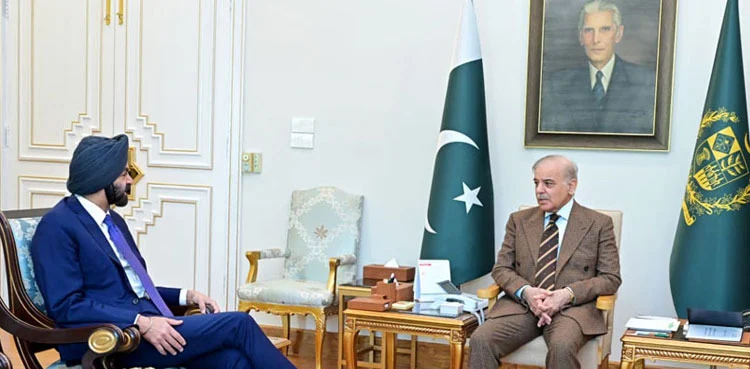
A significant boost to Pakistan’s economic narrative came this week as the World Bank chief lauds Pakistan’s economic reforms in a meeting with Prime Minister Shehbaz Sharif in Islamabad. The endorsement by World Bank Group President Ajay Banga reflects growing international confidence in Pakistan’s reform trajectory at a time when the country is focused on stabilizing its economy and laying the foundation for sustainable growth.
Ajay Banga’s visit to Pakistan is not merely ceremonial. It is a strategic engagement centered on the 10-year World Bank Country Partnership Framework, a long-term roadmap designed to align Pakistan’s development priorities with global best practices and development financing.
World Bank President Ajay Banga’s Official Visit to Pakistan
World Bank (WB) President Ajay Banga arrived in Pakistan on a four-day official visit aimed at strengthening development cooperation and reviewing progress on key reform initiatives. The visit underscores the World Bank’s continued engagement with Pakistan as a development partner during a critical economic phase.
During his stay, Banga is expected to hold discussions with government leadership on economic reforms, development financing, and sector-specific cooperation under the Country Partnership Framework, which spans a decade and focuses on sustainable, inclusive growth.
Prime Minister Shehbaz Sharif Welcomes World Bank Chief
Prime Minister Shehbaz Sharif welcomed Ajay Banga on his first official visit to Pakistan, describing the engagement as an important milestone in Pakistan–World Bank relations. The prime minister expressed appreciation for the World Bank’s continued support for Pakistan’s economic development and reform agenda, emphasizing the importance of international partnerships in addressing structural challenges.
He reiterated that Pakistan values its long-standing partnership with the World Bank, which has supported the country across multiple development cycles, economic transitions, and reform phases.
Strengthening the 10-Year Country Partnership Framework
A key focus of the meeting was the 10-year World Bank Country Partnership Framework, which outlines Pakistan’s development priorities and the World Bank Group’s strategic support over the next decade.
Prime Minister Shehbaz Sharif acknowledged the Bank’s commitment to supporting Pakistan’s national development goals under this framework. He noted that the partnership reflects shared objectives, including economic stability, social development, and institutional strengthening.
The prime minister also praised Ajay Banga’s leadership and efforts to further enhance the World Bank’s effectiveness as a global development partner, particularly for emerging and developing economies like Pakistan.
Comprehensive Economic Reform Programme Underway
Prime Minister Shehbaz Sharif informed the World Bank president that the government is implementing a comprehensive reform programme tailored to Pakistan’s national needs. These reforms are designed to achieve long-term economic stability rather than short-term fixes.
The reform agenda focuses on strengthening economic fundamentals, improving governance, and ensuring fiscal discipline while protecting vulnerable segments of society. According to the prime minister, such reforms are essential for restoring macroeconomic balance and ensuring sustained growth.
World Bank’s Support Across Key Economic Sectors
The meeting highlighted the World Bank’s valuable assistance in several priority sectors that are central to Pakistan’s development strategy.
Key sectors include:
• Infrastructure development, aimed at improving connectivity and economic efficiency
• Agribusiness, supporting food security and rural livelihoods
• Digital growth, enhancing innovation and service delivery
• Energy sector reforms, improving sustainability and reducing inefficiencies
• Financial reforms, strengthening institutions and market confidence
The prime minister emphasized that World Bank support in these areas has played a crucial role in advancing Pakistan’s reform agenda and development objectives.
Focus on Implementation and Monitoring
While outlining reform priorities, Prime Minister Shehbaz Sharif stressed that effective implementation is as important as policy formulation. He underlined the need for fast-tracked execution and strong monitoring mechanisms aligned with the Country Partnership Framework.
According to the prime minister, improved coordination and oversight would help remove bottlenecks that often delay development projects and reduce their impact. Strong monitoring ensures that resources are utilized efficiently and reforms deliver tangible outcomes.
Commitment to Job Creation and Investor Confidence
The prime minister reaffirmed the government’s commitment to job-led economic growth, restoring investor confidence, and pursuing wide-ranging administrative reforms.
Job creation remains central to Pakistan’s economic strategy, particularly as the country seeks to harness its young population for productive growth. Administrative reforms aim to improve governance, enhance transparency, and create a more business-friendly environment that attracts both domestic and foreign investment.
World Bank Reaffirms Long-Term Partnership
World Bank Group President Ajay Banga thanked Prime Minister Shehbaz Sharif for the warm reception and hospitality extended during his visit. He commended the Government of Pakistan for undertaking difficult yet necessary economic reforms and acknowledged the progress made under challenging circumstances.
Banga reaffirmed the World Bank Group’s commitment to expanding cooperation with Pakistan under its “One World Bank Group” approach, which promotes integrated solutions across development sectors.
Importance of Coordination and Efficient Resource Use
Ajay Banga emphasized that close coordination with development partners and the efficient use of resources are essential for achieving the objectives of Pakistan’s reform agenda. He highlighted that sustainable development outcomes depend on strong partnerships, effective planning, and disciplined implementation.
The World Bank chief’s remarks reinforced the idea that economic reforms must be supported by institutional capacity and collaborative efforts to deliver long-term benefits.
Insights: Why This Endorsement Matters
The fact that the World Bank chief lauds Pakistan’s economic reforms in meeting with PM Sharif carries important implications:
• It signals renewed international confidence in Pakistan’s reform direction
• It strengthens Pakistan’s credibility with global investors and development partners
• It supports continuity of reforms beyond short-term political cycles
• It enhances prospects for sustained development financing
Such endorsements help reposition Pakistan as a reform-oriented economy focused on long-term stability.
Frequently Asked Questions (FAQs)
Why did the World Bank chief praise Pakistan’s reforms?
The World Bank recognized Pakistan’s commitment to economic stability, sectoral reforms, and effective development planning under the Country Partnership Framework.
What is the Country Partnership Framework?
It is a 10-year strategic roadmap outlining cooperation between Pakistan and the World Bank to support development priorities and economic reforms.
Which sectors are receiving World Bank support?
Key sectors include infrastructure, agribusiness, digital development, energy, and financial reforms.
How does this affect Pakistan’s economy?
International endorsement strengthens investor confidence, supports reform continuity, and improves access to development financing.
Conclusion: A Step Toward Sustainable Economic Stability
The meeting in which the World Bank chief lauds Pakistan’s economic reforms in meeting with PM Sharif marks an important moment in Pakistan’s economic journey. It reflects international recognition of reform efforts aimed at stability, growth, and development.
While challenges remain, the engagement underscores a shared commitment between Pakistan and the World Bank to pursue long-term, inclusive, and sustainable economic progress. Continued implementation, coordination, and accountability will determine how effectively these reforms translate into tangible benefits for the people of Pakistan.