


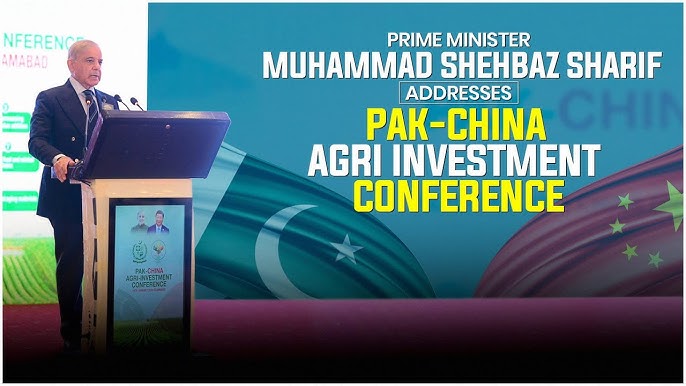
The Pak–China Agri Investment Conference unlocks USD 4.5 billion investment, marking a historic milestone in Pakistan–China economic cooperation and signaling unprecedented confidence of Chinese investors in Pakistan’s agriculture and food sectors. Held on 19 January 2026, the conference culminated in the signing of 79 Memoranda of Understanding (MoUs) between Pakistani and Chinese companies—an outcome that goes far beyond symbolic diplomacy and firmly anchors collaboration in real, on-ground projects.
Federal Minister for National Food Security and Research, Rana Tanveer Hussain, described the scale and depth of these commitments as a decisive shift from dialogue to investment-led partnership, aligning closely with national priorities and the broader objectives of CPEC Phase II.
A Strategic Shift from Talks to Tangible Investment
Unlike traditional forums focused on general discussions, the conference was purpose-built for results. According to the minister, it emphasized:
• Direct B2B matchmaking between Pakistani and Chinese firms
• Targeted sectoral engagement across high-impact agri and allied industries
• Project-based investment facilitation, ensuring readiness for implementation
This structure ensured that discussions translated into bankable projects, accelerating decision-making and fostering investor confidence. The outcome—USD 4.5 billion in pledged investments—reflects a maturing Pakistan–China economic relationship, particularly in agriculture, a sector central to Pakistan’s economy and food security.
Meticulous Preparation Enabled Breakthrough Results
The Ministry of National Food Security and Research undertook extensive preparatory work ahead of the conference. This included structured consultations with:
• Pakistani industry bodies
• Agribusiness associations
• Chinese enterprises and technology providers
Investment proposals were aligned with market demand, technology needs, and national development priorities, ensuring relevance and feasibility. This groundwork was instrumental in converting interest into formal agreements across multiple subsectors.
Insight: This preparatory approach contrasts with earlier investment forums where limited alignment often slowed post-event execution. Here, readiness was built in from day one.
Ten High-Impact Sectors Attract Major Investment
The 79 MoUs span ten high-impact agricultural and allied sub-sectors, underscoring the breadth of collaboration:
1. Food Processing and Value Addition
Investments will enhance domestic processing capacity, enabling Pakistan to export value-added food products instead of raw commodities.
2. Agri-Technology
Advanced technologies—precision farming, smart irrigation, and digital agriculture—will modernize production systems and improve yields.
3. Seeds and Plant Protection
Improved seed varieties and plant protection solutions will boost resilience against climate stress and pests.
4. Livestock and Dairy
Modern breeding, feed management, and cold-chain solutions will raise productivity in one of Pakistan’s largest rural employment sectors.
5. Meat and Poultry
Export-oriented processing facilities will help Pakistan meet international quality standards and access premium markets.
6. Fruits and Vegetables
Post-harvest handling and processing will reduce waste and increase farmer returns.
7. Fisheries and Aquaculture
Sustainable aquaculture systems and modern processing will unlock coastal and inland water potential.
8. Animal Feed
High-quality feed production will directly enhance livestock health and output.
9. Post-Harvest Infrastructure
Cold storage, logistics, and warehousing will address chronic post-harvest losses.
10. Agricultural Inputs
Local manufacturing of fertilizers and inputs will reduce import dependence and stabilize supply.
Transforming Agricultural Value Chains
Minister Rana Tanveer Hussain emphasized that these investments will modernize Pakistan’s agricultural value chains, introducing advanced production and processing technologies. The expected outcomes include:
• Higher productivity across crops and livestock
• Reduced post-harvest losses, a persistent challenge in Pakistan
• Stronger farm-to-market linkages, connecting farmers to processors and exporters
Example
In fruits and vegetables, improved cold-chain infrastructure can reduce losses that currently reach 30–40%, directly increasing farmer incomes without expanding cultivated area.
Employment, Rural Development, and Livelihoods
One of the most significant impacts of the Pak–China Agri Investment Conference unlocks USD 4.5 billion investment is its potential to generate large-scale employment, particularly in rural areas where poverty is concentrated.
• New processing plants and logistics hubs will create skilled and semi-skilled jobs
• Technology transfer will upskill the rural workforce
• Higher farm incomes will stimulate local economies
This inclusive growth model aligns with sustainable development goals and strengthens social stability.
Macroeconomic and Food Security Benefits
From a macroeconomic perspective, the realized investments are expected to:
• Contribute meaningfully to GDP growth
• Expand the agri-linked industrial base
• Boost export-oriented, value-added production
Enhanced domestic processing and supply chains will also play a crucial role in national food security by stabilizing prices and reducing reliance on imports.
Comparison
Previously, agriculture growth relied heavily on primary production. This new model emphasizes industrialization of agriculture, similar to China’s own transformation, enabling Pakistan to climb the value chain.
Alignment with CPEC Phase II Objectives
The conference outcomes closely align with CPEC Phase II, which prioritizes:
• Industrial cooperation
• Technology transfer
• Sustainable development
Agriculture, often overlooked in earlier phases, has now emerged as a central pillar of bilateral cooperation—linking rural development with industrial growth.
Government Commitment to Implementation
Reiterating the government’s resolve, Rana Tanveer Hussain assured that signed MoUs will be actively followed up to ensure conversion into operational projects. Measures include:
• Institutional coordination across ministries
• Dedicated facilitation for investors
• Continuous monitoring of project milestones
Expert Insight: Effective post-conference execution is critical. Pakistan’s emphasis on follow-through enhances credibility and long-term investor confidence.
Frequently Asked Questions (FAQs)
1.What is the total investment unlocked by the conference?
The Pak–China Agri Investment Conference unlocked approximately USD 4.5 billion through 79 MoUs.
2.Which sectors attracted the most interest?
Food processing, agri-technology, livestock and dairy, and post-harvest infrastructure emerged as key focus areas.
3.How will farmers benefit directly?
Farmers will gain from better technology, reduced losses, improved market access, and higher, more stable incomes.
4. How does this relate to CPEC Phase II?
The investments align with CPEC Phase II’s emphasis on industrial cooperation, technology transfer, and sustainable growth.
5.Will these MoUs translate into real projects?
The government has committed to active follow-up and facilitation to ensure timely implementation.
Conclusion: A Defining Moment for Pakistan’s Agriculture
The Pak–China Agri Investment Conference unlocks USD 4.5 billion investment, representing a defining moment for Pakistan’s agriculture and food sectors. By moving decisively from dialogue to delivery, the conference has laid the foundation for modernized value chains, stronger rural livelihoods, enhanced food security, and sustained economic growth.
With robust government commitment and deepened Pakistan–China collaboration, these investments have the potential to reshape the agricultural landscape—transforming challenges into opportunities and positioning Pakistan as a competitive, value-added player in global agri-food markets.