

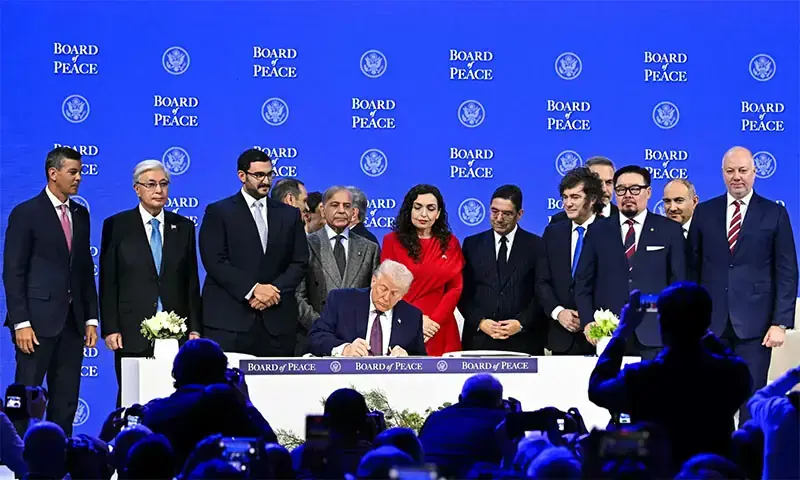
Pakistan’s decision to attend first meeting of Gaza Board of Peace on Feb 19 marks a significant moment in its foreign policy and diplomatic engagement in pursuit of peace and stability in the Middle East. The inaugural session of the newly formed Board of Peace, chaired by US President Donald Trump, is scheduled to take place in Washington, D.C., and aims to bring international focus to the crisis in Gaza and the broader challenge of conflict resolution.
Here we explore what Pakistan’s attendance means, why it matters for regional diplomacy, global implications, and frequently asked questions about this evolving international initiative.
What Is the Gaza Board of Peace?
The Gaza Board of Peace is a US‑initiated international body conceived to support ceasefire implementation, humanitarian assistance, reconstruction, and de‑escalation efforts in the Gaza Strip. First introduced at the World Economic Forum in Davos, it has drawn member states from across Asia, the Middle East, Europe, and beyond.
The board’s overarching mandate is to define a framework for lasting peace in Gaza, establish mechanisms for governance and reconstruction, and mobilize funding and political support. While its scope continues to evolve, the planned February 19 meeting aims to formalize its structure, mandate, and secretariat, and to begin concerted action on agreed goals.
Why Pakistan’s Participation Matters?
Upholding Pakistan’s Longstanding Policy on Palestine
Pakistan has historically voiced strong support for Palestinian rights, calling for an immediate ceasefire, humanitarian access, and a political settlement based on international law and relevant UN resolutions. Participation in the Board of Peace allows Pakistan to translate long‑standing rhetorical support into diplomatic engagement at the highest level.
Opportunity to Shape Reconstruction and Humanitarian Strategy
By attending the first meeting, Pakistan can convey its position directly to key international stakeholders and advocate for collective action to prevent further civilian casualties and address the dire humanitarian crisis in Gaza, where shortages of food, medicine, and shelter remain acute.
Strategic Diplomatic Positioning
Engaging with multinational initiatives enhances Pakistan’s voice in global conversations about peace and security. It positions Islamabad as a proactive player committed to conflict resolution, even amid wider geopolitical complexities.
International Context: Global Response to the Board of Peace
The formation of the Board of Peace has sparked mixed reactions globally. While many countries have joined or expressed interest, major Western allies have largely stayed away, citing concerns about its structure and mandate. Some critics argue that the board could undermine existing multilateral institutions like the United Nations by creating parallel mechanisms for peace and reconstruction.
This broad‑spectrum response highlights the challenges of forging new international institutions in complex conflict environments, especially where questions of legitimacy, representation, and authority are deeply contested.
What to Expect From the Feb 19 Meeting
Key Agenda Items
The first formal meeting is expected to:
• Define the structure and mandate of the Board of Peace.
• Establish a secretariat to coordinate future efforts.
• Discuss frameworks for humanitarian access, peacebuilding, and sustainable reconstruction in Gaza.
• Explore mechanisms for international cooperation and resource mobilization.
Discussions about potential contributions to stabilization forces or military support are considered premature at this stage, emphasizing that the immediate priority is institutional development.
Limitations and Controversies
The absence of Palestinian representatives within the board’s executive structure has been criticized by human rights groups and scholars. Critics argue that peace initiatives without direct representation from affected populations risk missing critical perspectives essential to sustainable solutions.
Furthermore, some international observers believe that the board’s leadership dynamics could inadvertently centralize decision‑making in ways that undermine existing multilateral frameworks. This has generated debate about the board’s long‑term legitimacy and impact.
Pakistan’s Diplomatic Balancing Act
Pakistan’s choice to attend reflects careful diplomatic calculation. Islamabad seeks to remain engaged in international discussions on Gaza while upholding its principled stance on Palestinian self‑determination. Participation does not necessarily signal full endorsement of all the board’s features, but rather indicates Pakistan’s desire to influence outcomes directly and responsibly.
FAQs About Pakistan’s Participation
Q1: What is the date and location of the first meeting?
The inaugural meeting of the Board of Peace is scheduled for February 19 in Washington, D.C. and will be chaired by President Donald Trump.
Q2: Will Pakistan’s Prime Minister attend?
Pakistan is likely to be represented by either the prime minister or the deputy prime minister, indicating the importance Islamabad places on the initiative.
Q3: Is Pakistan’s participation an endorsement of all board policies?
No. Pakistan’s engagement is framed as diplomatic participation, not unconditional support for every aspect of the board’s vision. Officials emphasize that Islamabad maintains its principles on international law and the rights of Palestinians.
Q4: Is there any requirement for financial or military contributions?
At this stage, discussions are focused on structuring the board and establishing its mandate. Talks about troop contributions or financial obligations would come later and are not part of the initial meeting’s agenda.
Conclusion
Pakistan’s decision to attend first meeting of Gaza Board of Peace on Feb 19 is a meaningful diplomatic gesture reflecting its long‑standing support for Palestinian rights and its readiness to engage in international peace efforts. While the initiative is not without controversy, Islamabad’s participation positions it as an active voice in shaping discussions around ceasefire sustainability, humanitarian relief, and long‑term peace in Gaza. As the global community watches closely, Pakistan’s balanced engagement will likely influence its diplomatic profile and underscore its commitment to peaceful resolutions rooted in international law and collective action.